Wednesday, October 26, 2016

Monumental Gardens

Buckminster fuller was working in the early 20th century, his Dymaxion world was cool.


Ha Has were built around grand country houses, to keep sheep and other livestock out of gardens.


Parco dei Mostri is a 19th century garden located at Bomarzo in a province north of Lazio, Italy.


Roman Forum is a marketplace that was built around the 3rd and 4th century. The marketplace is surrounded by several ruined government buildings.


Boboli Gardens is a park located in Florence,Italy. The collection of sculptures could be dated back to the 16th to 18th century.


Jardin du Petit Luxembourg is a garden located in Italy that was built back in the early 1600's by Marie de' Medici


Villa d'Este is a 16th century villa resides in Tivoli, Rome, famous for its hillside renaissance gardens.


Fontan dei quattro Fiumi or The fountain of Four Rivers is located in the Piazza Navona in Rome,Italy. The Design was made in 1651 by Gian Lorenzo Bernini.


The Jardin D'email was made by Jean Dubuffet in 1974, This creation was made for the sculpture garden of Kroller-Muller Museum located in Otterlo, Netherlands.


The Stowe Landscape Gardens is located in Buckinghamshire,England, it began in the late 17th century and continued to change landscaping styles until the 19th century.


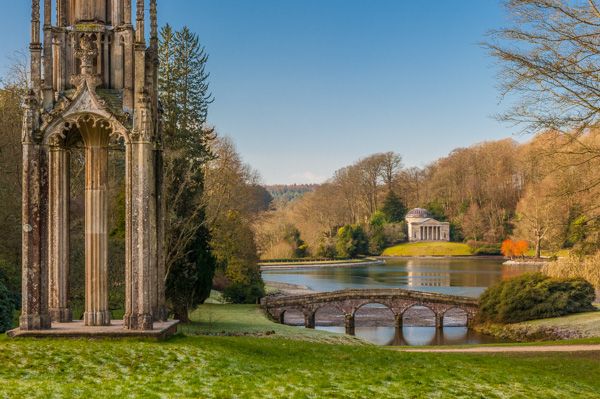
Stourhead is a hectare estate lying at the beginning of the river Stour near Mere, Wiltshire, England. The garden was designed by Henry Hoare II, but was laid out between 1741 and 1780.

Potomac Park was built between 1888 to 1912 near Washington DC. One of the main attractions of the park are the sakura trees.


Viscaya Miami
The viscaya villa was built between 1914 to 1922,  The museum is formerly James Deering's estate. Being conservative with the land, the estate and the elaborate garden  was built along the shore . The inspiration for the garden was based on Deering's trip to Italy. 


Fairchild Tropical Botanical Garden is a  botanical garden, located south of Coral Gables, Florida, the garden was established in 1936 by Robert H. Montgomery. The garden was officailly opened to the public in 1938 and was named after his good friend David Fairchild. 


Monday, October 24, 2016

Green Dreams Response

The garden is described by Robert Harbison to be built on the idea of contrast, originating as "a attempt to recapture something, but the form it finds for the act is that of a mental picture". The two forces go against each other with in the garden transforming it. Moving between the man made appearance and the natural, the eventual evolution is what is prized.

The most interesting garden i read about was the Stowe. The way Greek temples were thoughtfully placed for the viewer to have a mental road map.I liked how the scattered temples around the area open the viewers visual intake as well, like the Congreve monument was a little island that lured you to examine the terrain. The Grecian Valley is a rolling farm field built in the area closed off at the top with a Greek temple. It was nice to see the natural movement of a gardens evolution.

Tuesday, September 27, 2016

Art And Design In The Modern Age : Wolfsonian Visit

The Wolfsonian collection was interesting to observe the progress of art through time. The murals spanned from the depression era and touched on racial relations .The pieces were cool my favorite was the interracial couple walking through Paris.I could feel the mood of the painting, it felt like the couple was receiving stares. It feels so different now that being together with someone outside of your race is accepted. During the visit there was a lot of furniture, as time went on they became more and more simplistic. Modernization was prominent from the second half forward. All in All it was a nice collection i wish i could see more.


Sunday, September 18, 2016

Ornament and Pattern


  One thing that I pulled from this article is that "patterns are essential" . This article introduced a complex yet accurate way of looking at ornamentation. Like the Oliver sacks suggestion that we are "hard wired" to see patterns.  The article gives great examples, I liked Ela Cindoruk's work the dollies with the newspaper clippings. The weirdest one which was the chair that looked like it was growing out. Those Brazilian designers killed it .

  The six themes that were explained in the article were : Amplification, Elaboration, The Everyday , Inheritance, Kit of Parts , and Fantasy. The toast with the delftware pattern was so cool. I liked how it meant to savor your meal. Now after reading this is paying attention more to the patterns and the way people use ornamentation.  "Orno means to equip or to adorn in Latin ".

Friday, August 26, 2016

Why There Is No Such Thing As "Outsider" Art (Response)

The separation of artist are touched upon in this article. Jerry Saltz shows that there are great artist that are considered "Outsiders". His comparisons to Bill Taylor and Picasso was something that stood out to me. I then compared the two and they share similarities for there training background. Jerry Saltz touches on how these artist are looked over when they hold some of the best artwork for years.

Saltz plead that the museums should change the separation and integrate the looked over artist. I was surprised to see the artist that we researched were in the article. Something that also stood out to me was how women weren't able to become "great artist" because of there lack of training. I thought it was dumb that women couldn't be great artist because of there view as being pure. When they got so much talent it blows my mind.

White Bird By John Berger (Response)

The wonder of the white bird is thought provoking. this piece holds secrets that can be connected to the nature around us. The author describes the soaking and sizing for the wood in such detail that you could see in constructed in your head. Our momentary sense of wonder is examined in this article. Looking into how a wooden bird can change a perspective through its mysterious creation.

Something that stood out to me , was the author's concept of beauty being dependent on the community. The author says "the range of what a given community finds beautiful in nature will depend upon its means of survival, its economy, its geography." I thought about how everyone's background changes there view on the world. how we can be different personally but we all retain that innocent sense of wonder. 

"The language of art is and attempt to transform the instantaneous to the permanent."
-John Berger

Thursday, August 25, 2016

WARP First Post

WARP First Post (please title your first blog post the same as this one)

Hi Class, 

Please copy and paste the following text to use as your first blog post. It will also serve as a reference for you when organizing and labeling your blog posts:

Labels Help You Organize
All blog posts must be labeled with two keywords, which blogger calls Labels. When faculty visits your blog for evaluation purposes, we will use the labels to quickly find your work. If you do not use the keywords properly, we will not be able to find your work. Proper set-up and maintenance of your blog falls under the Research and Participation part of your grade which counts for 30% of the overall semester grade. 

Topical Keywords
The first set of keywords correspond to the module we are working in. We will refer to these as topical keywords since they correspond to the topic we are exploring over the two-week periods. Your first group of posts will be labeled under Topic: Creative Impulse since this is the first topic (Topic #1). Here are the topical keywords you will use through out the semester:

Topic: Creative Impulse
Topic: Pattern and Ornament
Topic: Rhinoceros
Topic: Narrative
Topic: Landscape
Topic: Zine

Categorical Keywords
The second set of keywords will organize your posts according to kind. Here are the Keywords you will use for Labels:

Exercises - tag for posts documenting all assigned exercises. The first one will be the paper folding exercise from the first class. 

Readings - tag for posts containing your two paragraph responses to the assigned readings. The first ones will be for "The White Bird" and the Jerry Saltz article from Vulture.com. 

Small Works - tag for posts documenting all assigned small works. The first blog post labeled Small Works will contain images and accompanying descriptions of the three small works you complete for the Creative Impulse Module (Topic #1). 

In-Depth Projects - tag for posts documenting all assigned In-Depth projects. The first blog post labeled In-Depth Projects will contain images (or video if appropriate) and accompanying descriptions of the more robust work you produce in response to the Creative Impulse Module (Topic #1).

Outside Visits - tag for posts containing your two paragraph responses to all required visits outside of the classroom. These include visits we do together as a class [during class time] or individually outside of class time. 

Please be sure to use both a topical and categorical keyword when labeling your posts.

Next Steps
1. After copying and pasting this text into your first blog post, create your labels from the keywords we listed above. In the Edit post window you will find an area titles Labels where you can add your own custom labels to your blog. This is where you will add the keywords we listed above. Please be sure to add all keywords to the Labels window for this first blog post. 

The easiest way to do this is by copying and pasting the following text into the Labels window for this blog post:

Topic: Creative Impulse, Topic: Pattern and Ornament, Topic: Rhinoceros, Topic: Narrative, Topic: Landscape, Topic: Zine, Exercises, Readings, Small Works, In-Depth Projects, Outside Visits


Here's a screen shot of what that looks like, and where to find Labels when editing a post
2. Now you are ready to create and label your first post. This will be the post for your in-class paper folding exercise. 

It should include a photo of your paper exercise and be labeled with the following two keywords: Topic: Creative Impulse, Exercises

3. Once you have complete all the above steps, please email a link to your new blog to me at: lambert.nwsa [at] gmail [dot] com. We will link your blog to the Art Unfolded blog. 

Looking forward to a great semester!

Don